


By SCM International Desk I Monday, Sept 21, 2026
TEHRAN — In a sharp rhetorical escalation ahead of the United Nations General Assembly, Iran’s Foreign Ministry accused the United States administration of building a modern-day “Iron Curtain” after Washington denied entry visas to key Iranian journalists, including President Masoud Pezeshkian’s official media team.
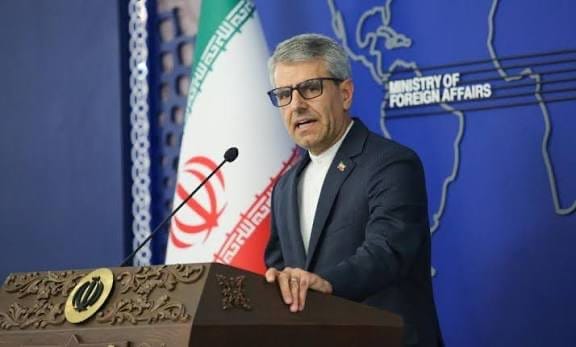
The diplomatic confrontation unfolded on Monday as President Pezeshkian prepared to travel to New York to address world leaders. Esmaeil Baqaei, the spokesman for the Iranian Foreign Ministry, issued a stinging rebuke of the U.S. decision, characterizing the visa refusals not as routine travel regulation, but as a deliberate attempt to suppress independent press coverage and control international narratives.
”When an administration slams its doors shut—even on American journalists it happens to dislike—and bars foreign reporters, including the Iranian president’s media team, whose voices it would rather silence, it is not managing access; it is trying to hide the truth and further its misinformation campaign by trampling on the right of access to information,” Baqaei said in a statement. “A nation that once took pride in tearing down the Iron Curtain now finds itself standing behind one of its own.”
The dispute highlights long-standing friction surrounding the United States’ role as host country for the United Nations Headquarters in New York. Under the 1947 UN Headquarters Agreement, the host country is generally obligated to grant visa access to foreign diplomats, delegates, and accredited press accompanying delegations to official UN functions, regardless of bilateral diplomatic disputes.
Iranian officials, including Habibollah Abbasi, the director-general of public relations for the Iranian presidency, designated the visa restrictions an “unprecedented hostile act” aimed at depriving the Iranian delegation of its primary media channel during the global summit.
The U.S. State Department has routinely maintained tight movement and administrative restrictions on Iranian officials attending UN meetings, citing foreign policy and national security considerations.
However, extending entry denials to press personnel accompanying a head of state marks a significant widening of those enforcement mechanisms.
The visa denial comes at an exceptionally volatile moment in U.S.–Iranian relations. Heightened military and economic friction across the Middle East—marked by ongoing maritime disputes in the Strait of Hormuz and counter-blockades on trade routes—has left formal communication channels between Washington and Tehran largely frozen.
Iran’s diplomatic strategy for the General Assembly relies heavily on shaping public sentiment and offering its perspective directly to foreign media markets. By blocking access to the presidential communications team, Tehran argues that Washington is denying international audiences access to primary sources and transparent reporting from the Iranian perspective.
The Iranian Foreign Ministry’s commentary invoking the Cold War metaphor of the “Iron Curtain” seeks to frame U.S. media policy as hypocritical, drawing comparisons between historical U.S. advocacy for free speech and current restrictive press policies targeting adversarial nations.
Despite the absence of his core communications staff, President Pezeshkian is scheduled to proceed with his high-stakes address before the UN General Assembly on Wednesday, where he is expected to address the regional security crisis, international sanctions, and the ongoing diplomatic impasse with the West.