By SCM Staff Writer I Friday, October 10, 2025
ABIDJAN, IVORY COAST | October 10, 2025
Agricultural experts and development leaders have called for a fundamental reorientation of African food policy, urging governments to stop treating farmers as recipients of food aid and instead empower them as essential private sector actors and key providers of food security.
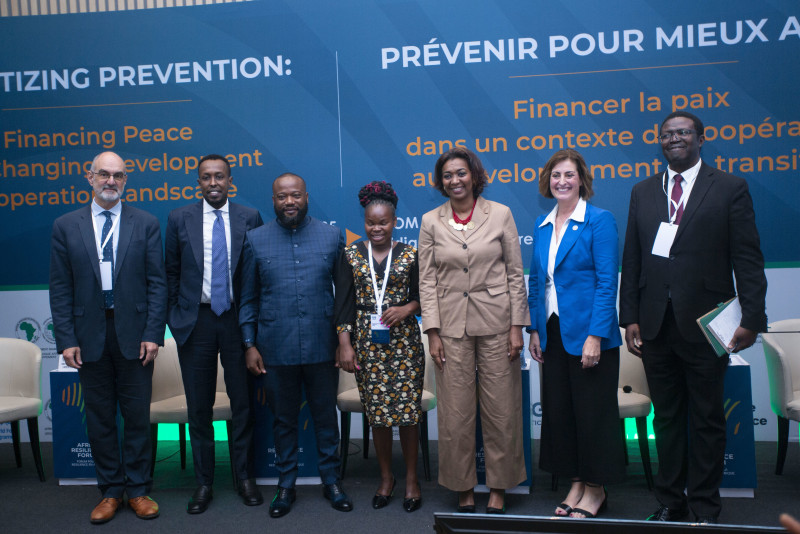
The consensus emerged from the 6th Africa Resilience Forum (ARF), held in Abidjan earlier this month, during a high-level panel discussion on achieving large-scale food security on the continent.
Beth Bechdol, Deputy Director-General of the Food and Agriculture Organization of the United Nations (FAO), stated the case plainly:
“Farmers are the private sector. They invest; they find solutions.” She added that development partners need “new matrices,” such as measuring improvements in producer incomes over time, to have a better impact on populations.
This sentiment was echoed by Roland Fomundam, CEO of Cameroon-based Greenhouse Ventures, who linked agricultural policy directly to stability.
“Agriculture is a dominant activity in crisis zones… without food, there is no peace,” he said.

Fomundam stressed the necessity of involving farmers in policy discussions, noting that policies are “very often drawn up without the farmers.”
The importance of domestic, private-sector mobilisation was underscored by Abdilhakim Yusuf Ali Ainte, Director of the Food Security and Climate Department in the Office of the Prime Minister of the Federal Government of Somalia. Drawing on his nation’s experience, he noted Somalia had mobilised $6 billion from its private sector to boost human capital and save lives.
“The most important resource is the private sector. We need a dynamic private sector invited around the table to provide sustainable solutions,” he declared.
Martin Fregene, Director of the Agriculture and Agribusiness Department of the African Development Bank Group (AfDB), emphasised that rebuilding Africa’s food systems does not require “reinventing the wheel.” Instead, he argued, the focus must be on building upon existing structures.
“Small and medium-sized enterprises produce all the food we eat. We need to see how we can get them to double their production and ensure their survival,” he said.
Mr. Fregene highlighted the AfDB’s strategy, which involves agricultural producers through direct financing, support for innovation, development of climate-resilient infrastructure, and facilitating access to essential agricultural inputs, alongside farmer training and networking.
However, challenges remain rooted in deep-seated perceptions. Kenyan agripreneur Felista Nyakio highlighted the need for a cultural shift, noting that farming is often “perceived as degrading work.”
She appealed for efforts to show farmers they are “part of the nation” and to inspire children to embrace agriculture.
The ARF, organised by the AfDB Group, operated under the theme “Prevention for better action: financing peace in a context of development cooperation in transition,” underscoring that food security and agricultural investment are fundamental pillars for peace and stability on the continent.