

By Emmanuel Thomas l Monday, Oct. 12, 2026
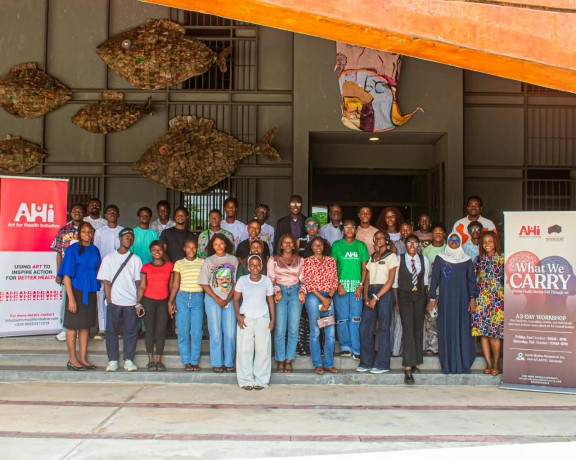
LAGOS, Nigeria — The Yemisi Shyllon Museum of Art (YSMA) at Pan-Atlantic University, in partnership with the Art for Health Initiative (AHI), recently hosted a two-day workshop exploring the intersection of visual art, public health, and mental resilience.
Titled “What We Carry: Stories of Mental Health and Resilience,” the Health Story Lab brought together 25 art students from the Yaba College of Technology (Yabatech), Epe Annex.
Held at the museum, the initiative provided emerging artists with a platform to examine their creative practice through the lens of human experience and emotional well-being.
Conceived by AHI as a participatory approach to health communication, the project recognizes the unseen pressures young people navigate—including social expectations, stress, grief, uncertainty, and hope—which are often difficult to articulate through traditional channels.
Over the two-day session, participants engaged with interdisciplinary experts across four core modules:
Public Health and Art in Health Communication: Led by public health strategist Dr. Olayinka Badmus.
Mental Health and Resilience: Facilitated by psychiatrist and psychotherapist Dr. Emmanuel Abayomi.
Expressing Emotional Realities Through Art: Led by Art Project Lead Temitope Oladeji.
Art for Social Change (Curated Museum Tour): Conducted by art historian and museum educator Charles Udeh.
The mental health session allowed participants to reflect on personal and societal pressures while considering how visual art can serve as a catalyst for community empathy and dialogue.
Following the sessions, students conceptualized original artistic ideas for peer and facilitator review.

This workshop marks the first time YSMA has formally utilized its platform to address public and mental health issues.
Highlighting the impact of the initiative, Solomon Nkwagu, Head of Corporate Communication and Visitors’ Services at YSMA, noted that the programme helped participants look beyond pure aesthetics.
“What made this experience particularly powerful was watching the students realize that their art could do more than communicate an aesthetic idea,” Nkwagu said. “They began to see the possibility of using their creative voices to start conversations around mental health, to tell relatable stories, and to offer moments of reflection and healing for others.”
He added that the collaboration aligns with YSMA’s broader mission to serve as an educational space where public issues can be examined through new lenses.
Chidera Rosecamille Aneke, Founder of the Art for Health Initiative, emphasized the need for more culturally resonant and human-centered health communication strategies.
“Health is not only communicated through statistics, campaigns, or clinical information; it can also be communicated through stories, images, symbols, and lived experiences,” Aneke explained.
“Working with these students demonstrated the immense possibilities that emerge when artists are equipped with the knowledge and space to process health concepts through their creative work.”
To ensure safe engagement with sensitive topics, the Health Story Lab framework incorporated ethical storytelling guidelines, focusing on destigmatizing mental health while avoiding required disclosures of personal trauma.
The participating students are currently developing original artworks based on the workshop’s themes. These works will be featured in a curated micro-exhibition in Lagos scheduled for late November 2026, transitioning the dialogue from a workshop environment into the public domain.
