

By Emmanuel Thomas l Tuesday, Oct.05, 2026
ABUJA — Ahead of Nigeria’s 2027 General Elections, the National Election Information System (NEIS) has announced an initiative to track and broadcast election results in real time, likening the seamless experience to streaming on popular entertainment platform Netflix.
The initiative aims to address lingering public skepticism regarding the collation process and ensure data integrity across all polling units nationwide.
According to details released by the group, the NEIS platform is designed to present accurate polling data sourced directly from field agents as voting concludes.
To ensure maximum accountability, this polling unit data will be displayed alongside uploads from the Independent National Electoral Commission’s (INEC) Result Viewing Portal (IReV), complete with the identities of the presiding officers at each unit.
”NEIS’s goal is to display accurate data in real time, sourced directly from polling units side-by-side with IReV uploads and the Presiding Officer’s name,” the platform stated.
Addressing the challenges of proving electoral malpractice in court or public discourse, the group emphasized that credible claims of rigging at collation centers or within digital portals require verified counter-evidence. “Genuine claims of collation-level or IReV upload rigging can only be achieved by providing real alternate figures,” NEIS added.

To achieve coverage across Nigeria’s over 176,000 polling units, NEIS has opened recruitment for its Civic Agent Network (neis.ng/civic), urging citizens and independent observers to join as field monitors.
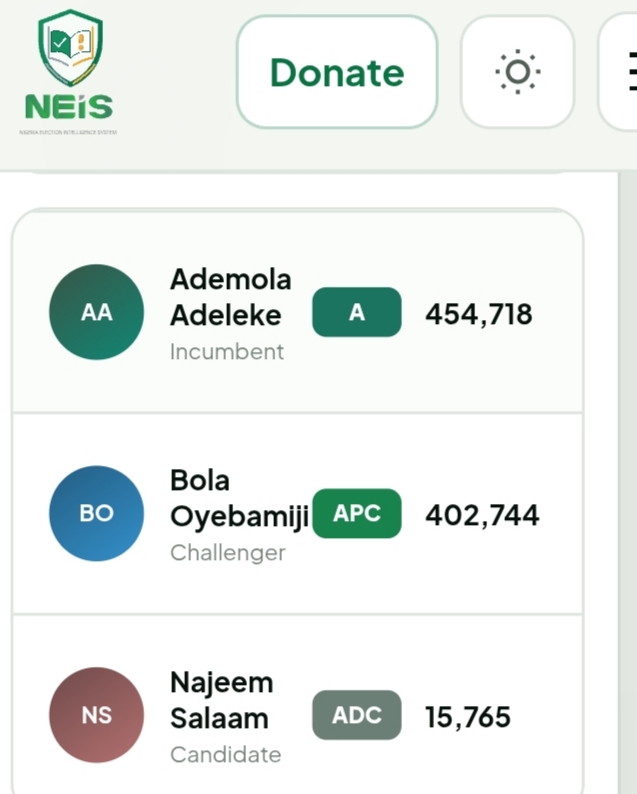
The platform has already deployed early iterations of its technology during off-cycle elections, pointing to data from the Osun State Governorship election (neis.ng/elections) as a practical demonstration of its side-by-side verification system.
The reliance on citizen-led tracking platforms like NEIS highlights ongoing public demand for electoral transparency.
The Electoral Act 2022: Nigeria’s legal framework officially authorized the electronic transmission of election results, giving rise to the INEC Result Viewing (IReV) portal and the Bimodal Voter Accreditation System (BVAS).
The 2023 Experience: While BVAS improved voter accreditation during the 2023 General Elections, technical glitches and delayed uploads to the IReV portal during the presidential poll led to widespread disputes and legal challenges over result authenticity.
The Role of Alternate Data: Under Nigerian electoral jurisprudence, legal petitions challenging declared election figures require petitions backed by certified polling unit result sheets (Form EC8A).
Civil society organizations and technology-driven initiatives are increasingly filling the gap by crowd-sourcing polling unit results to serve as an independent check on official totals.
