

By Emmanuel Thomas l Friday, Oct.02, 2026
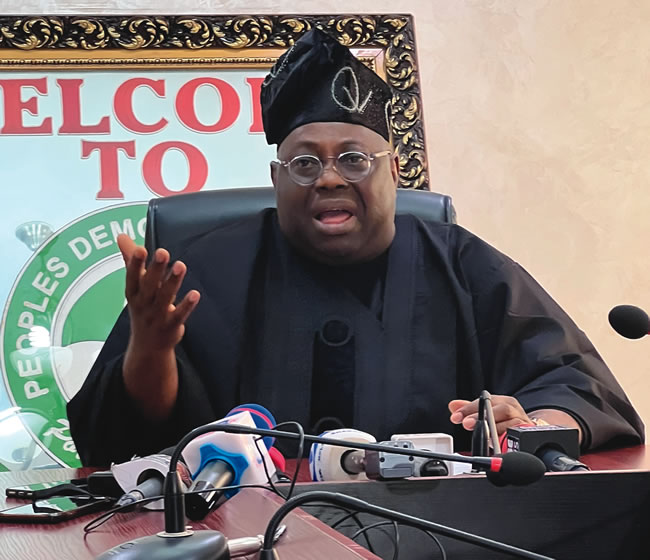
LAGOS — Renowned media mogul and Publisher of Ovation Magazine, Chief Dele Momodu, has strongly criticized President Bola Ahmed Tinubu over his address to the nation on the occasion of Nigeria’s 66th Independence Anniversary, describing the presidential broadcast as uninspiring and a cause for deep concern.
In an open statement addressed directly to the President, Momodu expressed profound disappointment with the tone and content of the speech.
He argued that an occasion meant to inspire hope and celebrate the nation’s resilience was instead reduced to a depressing account of the country’s ongoing challenges.
Rejecting the ‘Cancer Patient’ Metaphor
Reacting to President Tinubu’s comparison of Nigeria’s pre-2023 economic state to a cancer patient relying heavily on painkillers such as morphine, Momodu rejected the metaphor entirely. He argued that the administration’s economic prescriptions had worsened the nation’s health rather than curing it.
”My heart bled as you went into the morbid analogy of Nigeria as being a cancer patient that merely survived on painkillers before your arrival as a celebrated surgeon,” Momodu stated. “At the time you assumed power, Nigeria probably had stage two cancer, at the worst. You were expected to stabilize it and not to metastasize it into a stage four cancer.”
Momodu contended that the President’s decisions on his first day in office—particularly the abrupt announcement regarding fuel subsidy removal—were rushed and poorly executed, leading to severe economic shockwaves across the country.

”Your first prescription on day one was a monumental disaster,” he noted. “You took no time to properly examine your patient. You were too much in a hurry to administer your jab which automatically sent Nigeria into instant coma, and you’ve not been able to revive it. The least we expected from you was to stabilize and not to destabilize everything in sight.”
Fuel Subsidy and Economic Hardship
The Ovation publisher questioned the tangible benefits of the administration’s core economic policies, particularly the removal of the petrol subsidy. While acknowledging that government revenue and borrowing have increased, he stressed that the average Nigerian has felt no positive impact from these financial adjustments.
”Sir, your fuel subsidy stunt was a misadventure. I expected an apology for the medical calamity,” Momodu asserted. He listed a trail of deteriorating conditions, including rising insecurity, escalating poverty, and persistent government extravagance, while accusing politicians of prioritizing electoral politics over governance.
”So, Nigeria has made more money, amassed more loans, insecurity has increased, poverty has escalated, profligacy is palpable, politicians have remained insensitive, elections have taken priority over governance, renewed hope has collapsed into hopelessness and abject despair,” he added.
A Call for Tangible Progress
Looking ahead, Momodu warned that the public’s patience is rapidly wearing thin as citizens continue to grapple with high inflation and cost-of-living pressures.
He pointed out that while four years might not be enough to fix every historical issue facing Nigeria, citizens ought to see clear, unmistakable signs of progress by now.
”Nigerians have mostly given up on your promises. I doubt they are able to endure and accept the endless excuses,” Momodu declared.
“Four years may not be able to contain and solve all our problems, but the HOPE should be glaring by now.”
Momodu’s intervention joins a growing list of reactions from political leaders, civil society groups, and policy analysts following the President’s national broadcast, as debate continues over the trajectory of the administration’s economic reforms.
