

By Emmanuel Ukudolo, Tuesday, Sept 22, 2026
LAGOS, Nigeria – As Nigeria steadily marches toward the 2027 general elections, the atmospheric temperature of the nation’s political landscape is rapidly reaching a boiling point.
The justification offered for this blatant abuse of power was as revealing as the act itself: Ebhodaghe explicitly tied his draconian directives to the state leadership’s pledge to deliver 2.5 million votes to President Bola Ahmed Tinubu and the APC in the 2027 presidential election. Here, the mask of democratic governance completely slipped…If the coercion of commercial drivers represents the economic subjugation of vulnerable citizens, Ebhodaghe’s subsequent actions illustrate a deliberate attempt to criminalize opposition political activity altogether
However, this rising heat is not the result of robust policy debates, ideological clashes, or competing developmental visions for a nation grappling with severe socioeconomic pressures. Instead, it is being fueled by an escalating wave of partisan intimidation, high-handed coercion, violent altercations, and the systemic disruption of opposition political gatherings.
At the epicenter of this troubling slide toward total administrative authoritarianism sits the ruling All Progressives Congress (APC)—a party whose aggressive tactics to consolidate power threaten to strip Nigerian democracy of its foundational premise: free, fair, and uncoerced popular participation.
What is unfolding across various states is not merely the usual hyper-partisanship characteristic of Nigerian electoral cycles; it represents a coordinated, structural assault on the democratic space. The fundamental rights to freedom of assembly, freedom of association, and the liberty to hold political opinions without fear of state reprisal are being systematically dismantled.
Through a lethal combination of state apparatus enforcement and partisan thuggery, local authorities are converting public spaces, commercial hubs, and private businesses into partisan enclaves where opposition voices are forbidden to breathe.
The Microcosm of Coercion: The Case of Esan West Local Government
To comprehend the sheer gravity and brazenness of this impending crisis, one needs to look no further than recent developments in Edo State.
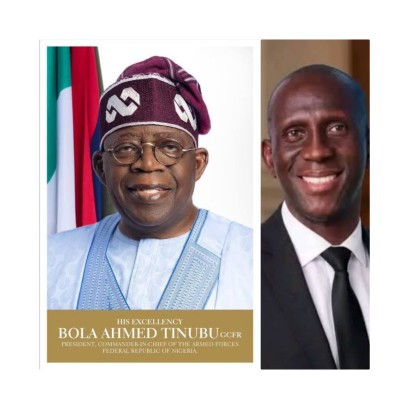
The executive actions and public declarations of Hon. Blessing Albert Ebhodaghe (popularly known as “BB”), the Chairman of Esan West Local Government Area, serve as a textbook case study in state-sponsored political intimidation.
In a series of alarming events that captured national attention, Ebhodaghe openly demonstrated how local government power can be weaponized to crush political pluralism.
During a publicized visit to motor parks in Ekpoma, including the Onitsha Motor Park, the Council Chairman issued what he termed a “standing warning” to commercial transporters. Ebhodaghe explicitly mandated that all commercial drivers and park operators within the local government area must wear All Progressives Congress (APC) branded caps or face immediate eviction and severe operational sanctions.
In viral video recordings of the encounters, Ebhodaghe was heard declaring that on no account should any driver wear a cap or display any material belonging to an opposition party. Stripping away any illusion of administrative neutrality, he warned park leaders that “there will be no friendship in this business,” threatening to personally remove any driver found violating his partisan mandate.
Nigeria’s democracy was not won on a silver platter; it was built on the sacrifices of generations who fought against military dictatorship to secure basic civil liberties. The emerging trend where ruling party officials act as feudal lords—dictating what citizens wear, where businesses can operate, and who is allowed to hold a meeting—is a betrayal of that democratic struggle
Moments later, APC-branded headwear was forcefully distributed to drivers, transforming an essential public transport hub into a forced partisan billboard. To further consolidate this stranglehold on local transportation, additional directives emerged outlining intentions to restrict commercial motorcycle operations within the council area—a move widely interpreted as an effort to enforce total compliance and neutralize non-aligned transport unions.
The justification offered for this blatant abuse of power was as revealing as the act itself: Ebhodaghe explicitly tied his draconian directives to the state leadership’s pledge to deliver 2.5 million votes to President Bola Ahmed Tinubu and the APC in the 2027 presidential election. Here, the mask of democratic governance completely slipped.
In the eyes of the ruling apparatus, economic livelihoods, municipal regulation, and public infrastructure are no longer services provided to citizens, but leverage to exact partisan loyalty.
Weaponizing State Power Against Private Enterprise
If the coercion of commercial drivers represents the economic subjugation of vulnerable citizens, Ebhodaghe’s subsequent actions illustrate a deliberate attempt to criminalize opposition political activity altogether.
In a leaked audio recording that sent shockwaves through political and legal circles, the Esan West Council Chairman was heard threatening to demolish hoteliers’ properties if they hosted meetings for opposition platforms, specifically targeting groups like the Nigeria Democratic Congress (NDC). Ebhodaghe issued an unambiguous ultimatum to private business owners: provide a venue for opposition gatherings, and the state will destroy your business.

”The government will bring down any building or business of any person that attends any NDC meeting in his hotel,” the Chairman was recorded saying.
When challenged on whether the state possessed the authority for such actions, Ebhodaghe asserted absolute administrative dominance over property rights: “The land you build your hotel belongs to the Government… We own the land and we would show it soon.” Crucially, when asked if this constituted an official threat from the government, he unabashedly responded: “Yes, it’s a threat from the government and me.”
This explicit admission underscores a dangerous doctrine of land ownership weaponization. By leveraging state regulatory frameworks and land tenure laws as tools of political blackmail, the ruling party is attempting to starve the opposition of physical meeting spaces. If hospitality operators, event centers, and property owners face economic ruin or structural demolition simply for renting space to non-APC groups, the opposition is effectively rendered homeless within the constitutional boundaries of their own country.
The Broader Pattern: Disruption, Violence, and Institutional Silence
The terrifying reality of the Esan West episodes is that they are not isolated incidents of an overzealous local official. Rather, they represent a micro-level execution of a macro-level strategy being deployed across various strongholds.
Across several states, opposition parties find themselves routinely barred from using public stadiums, subject to arbitrary campaign permit denials, targeted by state-aligned revenue task forces, and physically attacked by partisan thugs while law enforcement agencies look on with calculated indifference.
When state governors and council chairmen operate under the belief that they must deliver astronomically high vote quotas for the center at all costs, the democratic process ceases to be a competition of ideas.
When local government chairmen issue explicit threats of property demolition and unlawful eviction on record, the police and the Department of State Services (DSS) ought to act immediately to enforce the rule of law and protect citizens’ constitutional rights
It becomes a desperate war of territorial dominance. Violent altercations at opposition rallies, the destruction of campaign paraphernalia, and the intimidation of political organizers are the direct, inevitable consequences of an elite political culture that views opposition presence not as a democratic necessity, but as treasonous intrusion.
Perhaps most damning in this whole dynamic is the loud, echoing silence of institutional guardians.
When local government chairmen issue explicit threats of property demolition and unlawful eviction on record, the police and the Department of State Services (DSS) ought to act immediately to enforce the rule of law and protect citizens’ constitutional rights.
Yet, law enforcement often remains passively silent, creating a climate of total impunity. This perceived institutional complicity sends a chilling message to the public: the state’s security apparatus exists not to protect the citizen or the constitution, but to safeguard the ruling party’s electoral hegemony.
The Implications for the 2027 General Elections
As Nigeria approaches 2027, the long-term implications of these repressive tactics are catastrophic for the nation’s democratic health:
Voter Apathy and Disillusionment: When citizens see that commercial drivers are forced to wear party insignia to earn a living and that private businesses face demolition for hosting political discussions, faith in the ballot box evaporates. If the outcome is perceived as pre-determined through state coercion, millions of voters will simply stay home, leaving electoral outcomes to be decided by organized violence and state-mandated mobilization.
The Descent into Political Extremism: By closing off legitimate, peaceful channels for opposition assembly and civic organizing, the ruling party risks pushing political grievances underground. Denying constitutional spaces for political engagement historically leads to increased political cynicism, radicalization, and violent resistance, threatening national security and political stability.
Erosion of Economic Freedoms: The threat to demolish private hotels and restrict transport workers over political affiliations undermines the very foundation of property rights and free enterprise.
No economy can thrive when private assets and individual livelihoods are subject to the arbitrary whims of partisan enforcers.
Institutional Decay of Civil Governance: Converting municipal administration into a partisan political apparatus corrupts basic governance. Local governments exist to provide primary healthcare, sanitation, basic infrastructure, and public order—not to serve as intimidation squads for presidential electoral targets.
A Imperative Call for Democratic Redemption
Nigeria’s democracy was not won on a silver platter; it was built on the sacrifices of generations who fought against military dictatorship to secure basic civil liberties. The emerging trend where ruling party officials act as feudal lords—dictating what citizens wear, where businesses can operate, and who is allowed to hold a meeting—is a betrayal of that democratic struggle.
The All Progressives Congress (APC) leadership at the national level, along with President Bola Ahmed Tinubu, must realize that electoral victories secured through blatant coercion, property destruction threats, and civic suppression carry no legitimacy. A government that commands compliance through fear rather than performance forfeits its moral authority to govern.
If Nigeria is to avert a systemic crisis in 2027, this slide into authoritarianism must be halted immediately. The Electoral Act and the Constitution of the Federal Republic of Nigeria must be upheld strictly. Law enforcement agencies must demonstrate uncompromising neutrality by investigating and prosecuting any official—regardless of party affiliation—who uses state authority to threaten, intimidate, or harm political opponents or private citizens.
The actions of officials like Blessing Albert Ebhodaghe in Esan West are not minor political squabbles; they are early warning alarms of a failing democratic order. If left unchecked, the 2027 elections will not be a referendum on governance, but a grim display of state-sanctioned political conquest.
Nigeria deserves better, and the time to defend its democratic integrity is now.
