

By SCM Staff Writer
LEBANON’S President has launched a blistering attack on Israel, branding a deadly strike on three journalists “blatant crime.”
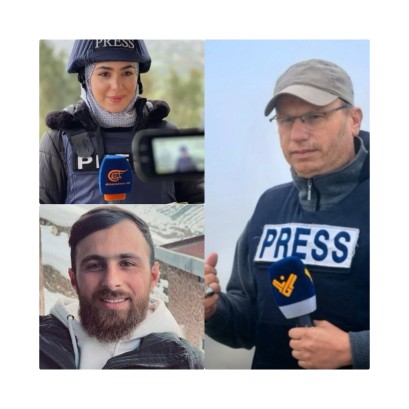
President Joseph Aoun hit out after journalists Ali Shoeib, Fatima Ftouni, and Mohammad Ftouni were killed in a targeted blast while reporting near the border.
In a scathing statement, the President accused the Israeli military of showing total contempt for the rules of engagement.
”Once again, the Israeli aggression violates the most basic rules of international law, international humanitarian law, and the laws of war,” Aoun fumed.
The trio were on assignment covering the escalating cross-border skirmishes when the strike hit. Colleagues described the team as dedicated professionals who were clearly marked as press when the tragedy occurred.
The killings have sparked a diplomatic firestorm, with Lebanon now weighing up a formal complaint to the UN Security Council.
Beirut officials claim the attack was a deliberate attempt to silence reporting on the ground, while the Israeli military has previously insisted it does not target journalists.

The deaths add to a mounting and grizzly toll of media workers caught in the crossfire of the regional conflict, sparking fresh fears for the safety of crews operating on the front lines.
To give your readers the full picture, here is the context surrounding this incident:
The Conflict: Tensions between Israel and Lebanon have reached their highest point in years, characterized by daily exchanges of fire between the Israeli Defense Forces (IDF) and Hezbollah militants.
Journalists Under Fire: This is not an isolated incident. Several international organizations, including Reporters Without Borders (RSF), have raised alarms over the rising number of media fatalities in South Lebanon.
In previous months, high-profile strikes have claimed the lives of Reuters and Al Jazeera staff in the same region.
International Law: Under the Geneva Conventions, journalists in war zones are classified as civilians. Intentionally targeting them is considered a war crime.
President Aoun’s rhetoric specifically targets this legal framework to pressure the international community for a formal investigation.
Regional Instability: The border area (often referred to as the “Blue Line”) is currently a “no-go” zone for civilians, but remains a flashpoint for news crews attempting to document the humanitarian and military impact of the strikes.
