

Titus Eleweke, South East editor
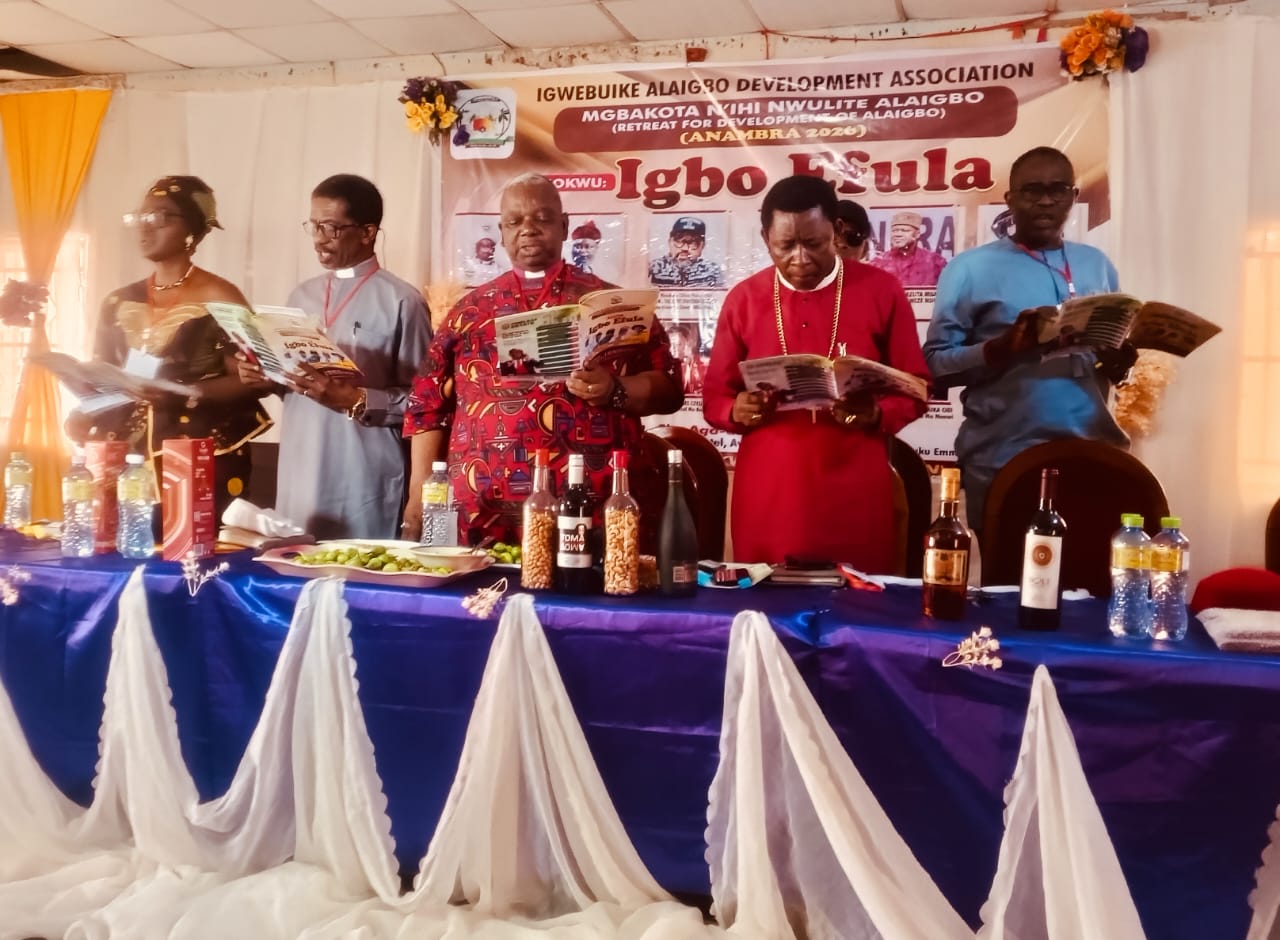
AWKA, Anambra – An Igbo group known as Igwebuike Alaigbo Development Association has commenced an aggressive campaign for the restoration and unity of Ndi Igbo.
Igwebuike Alaigbo is a pan-Igbo, non-governmental organization with a specific focus on the holistic development of Igbo land. It is a people-oriented civil society group established by progressive-minded Igbo patriots to provide a consolidated platform for rebuilding Alaigbo into a safer, self-reliant, and globally outstanding nation.
Some of its objectives are to restore, revive, and promote Igbo values, as well as to make Alaigbo productive and peaceful for habitation.
The group also seeks to promote closer ties and rapport among all tribes that share historical affinity with Ndi Igbo.
The National Leader of the group, Most Rev. Dr. Isaac Chijioke Nwaobia, in his opening speech in Awka, Anambra State, said the main focus of the body is to foster unity among Ndi Igbo and join hands to build a better society for prosperity.
He described the Igbo nation as a people materially blessed but currently passing through numerous challenges.
“For us to remain focused and achieve God’s agenda for us, we must be united, and that is what we are committed to achieving through this association,” he added.
According to him, Anambra 2026 has been structured to enable Ndi Igbo to chart a course for the betterment of all Igbo people.
Speaking during the summit, Mr. John Kennedy, one of the guest speakers, urged the average Igbo person to be proud and bold wherever they find themselves.
He challenged Igbo youths to be resilient and focused within the Nigerian enterprise.
“Do not be intimidated by anybody wherever you are in this country or in the world,” he said.
He further stated that Ndi Igbo will rise again in Nigeria and shall never retreat in the struggle for the Igbo cause.
He called on every Igbo person to encourage and support the Igbo cause in Nigeria, urging Igwebuike to open channels of contact with their brothers and sisters across the world.
The President of the Pentecostal Fellowship of Nigeria, Anambra State chapter, Bishop Moses Ezedebego, said the challenges facing the Igbo people stem partly from intimidation by Western civilization.
According to him, “I see it as an inferiority complex because we do not value our culture.”
He said that due to the perceived superiority of Western development, many Ndi Igbo have lost pride in their heritage.
“What they have done to us is quite painful. If you go to other tribes, they hold firmly to the values of their traditions and culture. Most times, an Igbo person is preoccupied with foreign values and traditions that are not in line with Igbo heritage. I see it as a problem of inferiority complex. Yet, the Igbo are blessed, intelligent, equipped, and highly honored by God,” he said.
He stressed the need to create awareness about eroding values, noting that the movement should not be limited to meetings but should involve concerted efforts to safeguard traditions that are seriously under threat.

He called for orientation programs and the establishment of a standard body in every Igbo state that would utilize radio and television to educate people on the importance of preserving Igbo values.
According to him, such a body would champion Igbo culture and tradition, emphasizing that tradition is different from idolatry.
“Tradition is what we are known for,”
“I believe Igwebuike should do more than just hold meetings. This is my first time hearing about this body. We must create platforms to raise awareness among our people. We should be proud of our values and traditions,” he added.
In her speech, Prof. Njideka Ebisi of Chukwuemeka Odumegwu Ojukwu University urged the Igbo people to revisit their history and identify where they may have erred.
According to her, for the Igbo to discover their challenges, they must understand where they went wrong.
“We must begin to respect our traditions and culture. We can reject what is evil and embrace what is good. We should be intentional about training our children in good manners. It is the responsibility of parents to raise children who will be useful to society. We should train our children in the ways of old where they are right,” she said.
She criticized the failure of Igbo parents to speak the Igbo language to their children, describing it as another threat to Igbo unity and purpose.
“We must educate our children on culture and values. We must revive the Umu nna, Ndi Ada, and Nze na Ozo systems,” she said.
She also identified the inability of the Igbo to see themselves as one united people as a major problem.
“We have not come to terms with seeing ourselves as one united people. There are different ideologies about who we are.
Western nations and the media have a serious negative influence on our identity and values. This erosion of values is ongoing, and it is the responsibility of parents, as primary agents of socialization, to ensure these our values do not become extinct. Parents have a lot of work to do,” she added.
Also speaking, Venerable Dr. Chima Ugochukwu urged Igbo parents to make it a duty to teach the Igbo language in schools and homes.
He blamed the Igbo political elite for corruption, stating that it has made them timid among other tribes.
He urged Igbo youths to resist being treated as second-class citizens in Nigeria or becoming subservient to others.
“The Igbo should have a think tank—people who will champion the Igbo cause in the country. Many are attempting to rewrite Igbo history. We should establish departments to respond to critiques of the Igbo nation. We must pursue the establishment of a seaport in the South-East and encourage our people to invest at home, as other tribes rarely invest in the South-East,” he said.
Chief Sir Chimezie Nwakpadolu also blamed some of the Igbo challenges on clergy and traditional rulers who, according to him, have compromised with the government.
He accused some clergy and traditional rulers of becoming appendages of politicians because of financial inducements.
“They have sold out to politicians. If we are united, there is nothing we cannot achieve. Those clergy and traditional rulers who should speak the truth often fail to do so because of what they receive from the government. With such fear among leaders, the Igbo people face serious challenges,” he added.
