

By our Correspondent in Lagos
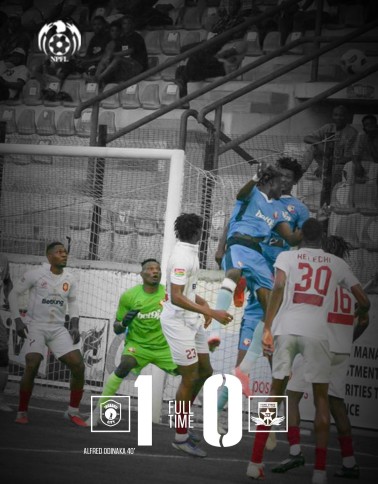
The historic Mobolaji Johnson Arena, nestled on the edge of the Lagos lagoon, transformed into a raucous gladiatorial pit on Sunday as Ikorodu City claimed a seismic 1-0 victory over regional heavyweights Remo Stars.
In a match where the venue itself felt like a twelfth man, the legendary Onikan Stadium (now the Mobolaji Johnson Arena) lived up to its reputation as the soul of Nigerian football.
The 10,000-capacity ground, refurbished but still echoing with decades of footballing heritage, was a sea of yellow and blue, vibrating with the rhythmic chants of the Lagos faithful.
From the first whistle, the atmosphere was suffocating for the visiting Sky Blue Stars.
The tight, compact nature of the Onikan turf—where the fans are so close they can practically whisper in the players’ ears—seemed to rattle Daniel Ogunmodede’s Remo Stars, who usually prefer the wide-open spaces of their home in Ikenne.
Waterfront Drama
The deciding moment came late in the first half.

With the humid Atlantic breeze swirling through the stands, Ikorodu City’s forward line ignited a frenzy. A clinical finish sent the home crowd into a state of delirium, the roar of the “Oga Boys” fans carrying across the water to the nearby Marina.
Remo Stars, currently fighting at the sharp end of the NPFL table, threw everything at the hosts in the second period. However, the Ikorodu defense, buoyed by the deafening support from the Onikan bleachers, held firm.
Every clearance was cheered like a goal, and every Remo mistake was met with a wall of noise that made communication nearly impossible for the visitors.
The Fortress of Lagos
As the sun set over the Lagos Island skyline, the final whistle triggered a pitch invasion of joy. For Ikorodu City, this wasn’t just three points; it was a statement made in the most iconic stadium in the country.
Remo Stars will head back across the border to Ogun State wondering how they let the Lagos cauldron swallow them whole. In the NPFL, many stadiums are tough to visit, but when the Onikan lights are on and the fans are in full voice, it remains the most intimidating—and electric—venue in West Africa.
