

By Emmanuel Thomas l Tuesday, Nov 26.25
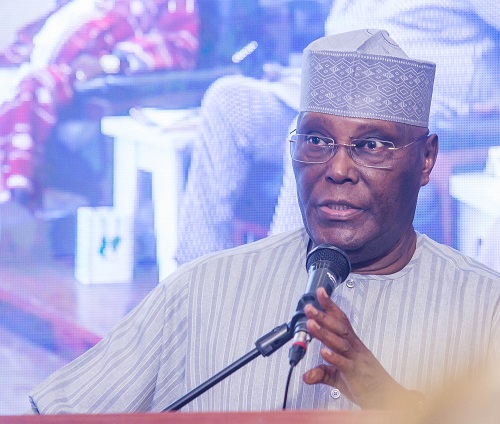
ABUJA — Former Nigerian Vice President and prominent opposition figure, Alhaji Atiku Abubakar, has issued a scathing indictment of the Federal Government, accusing it of attempting to “nationalise” a controversial private revenue collection model through the “quiet appointment” of Xpress Payments Solutions Limited as a new Treasury Single Account (TSA) collecting agent.
In a strongly worded statement, the former Vice President labeled the move a “dangerous resurrection of the Alpha Beta revenue cartel,” a firm known for its dominance in Lagos State’s revenue collection during and after President Bola Tinubu’s tenure as governor. Atiku warned that this template, which he claims “created a private toll gate around public revenue,” is moving Nigeria “from a republic to a private holding company.”
”What we are witnessing now is the attempt to nationalise that same template, moving Nigeria from a republic to a private holding company controlled by a small circle of vested interests,” Atiku declared.
Governance by Stealth
Alhaji Atiku did not hold back on the timing of the decision, criticizing the government for introducing such a policy amid a worsening national security crisis.
He argued that to push through the appointment while Nigerians “are mourning loved ones lost to the deepening insecurity crisis… is not only insensitive, it is a deliberate act of governance by stealth.”
He asserted that the priority for the nation’s leadership should be securing lives, “not on expanding private revenue pipelines.”
Fundamental Questions Raised
The former Vice President raised several critical questions regarding the process and necessity of the appointment:
Why was the appointment “rushed and smuggled into the public space” without consultation, stakeholder engagement, or National Assembly oversight?
What additional value does Xpress Payments provide that existing TSA channels do not already offer?
”Who truly benefits from this? Nigeria or an entrenched political network?”

Atiku categorically dismissed the move as “not reform,” but rather “state capture masquerading as digital innovation.” He stressed that Nigeria’s economy requires greater transparency and stronger institutions, not “more middlemen between citizens and their government revenue.”
Calling on the Federal Government to “come clean with Nigerians,” Atiku issued five key demands:
Immediate suspension of the Xpress Payments appointment pending a public inquiry.
Full disclosure of the contractual terms, beneficiaries, fee structures, and selection criteria.
A comprehensive audit of TSA operations to prevent the “creeping privatisation of revenue collection.”
A legal framework that prohibits the use of private proxies in core government revenue systems, avoiding “executive shortcuts.”
A national security priority shift, recognizing that economic governance must not be conducted “in the shadows.”
The opposition leader insisted that Nigeria’s revenues are “the lifeblood of our national survival,” not “political spoils.”
He urged the government to “abandon this Lagos-style revenue cartelisation and return to the path of transparency, constitutionalism, and public accountability.”
