

By SCM Staff Writer I Thursday October 30, 2025
BUSAN, South Korea -The Trump administration announced a major agricultural victory on Thursday, claiming a new trade agreement framework with Beijing that commits China to purchasing 25 million tons of American soybeans annually, with an immediate sale of 12 million tons slated to proceed at once.
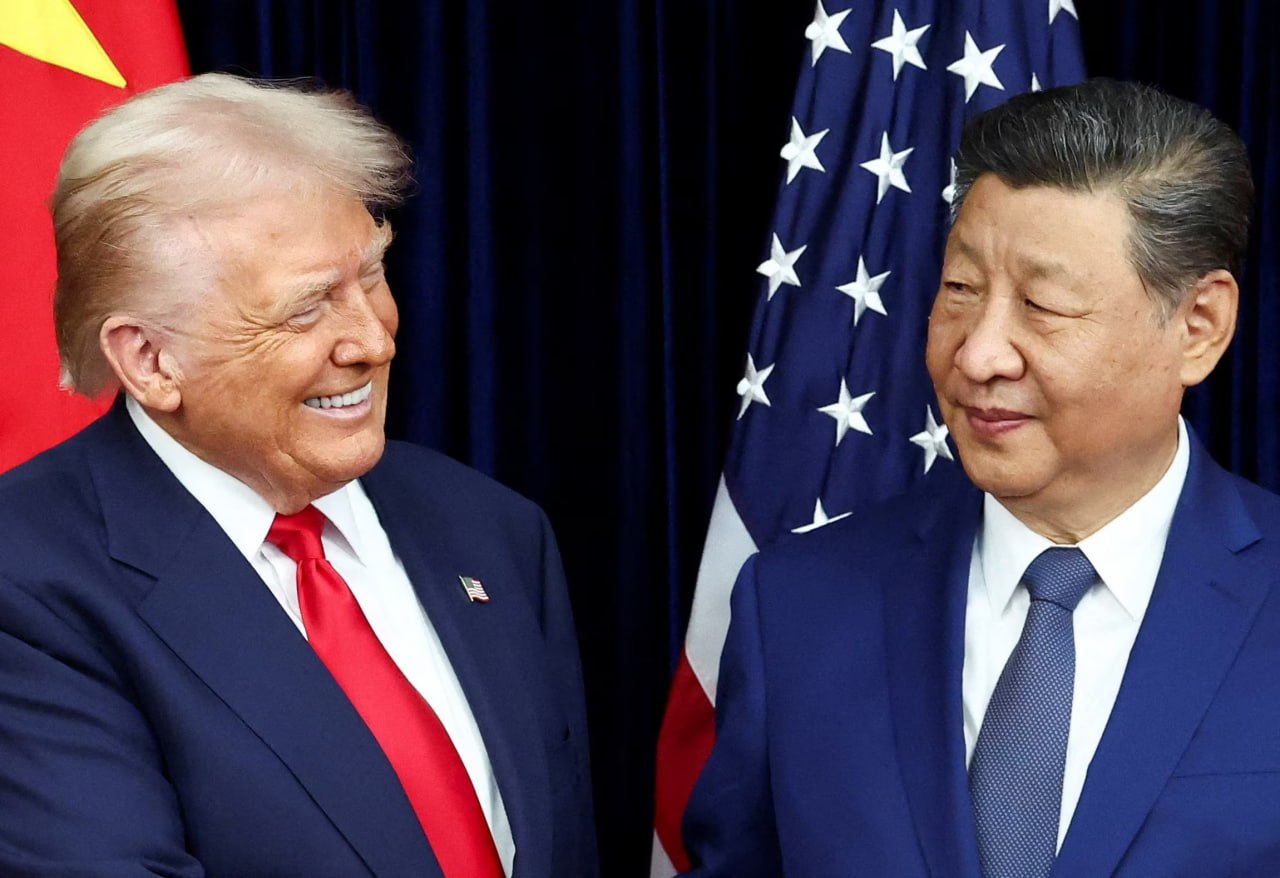
The commitment, confirmed by Treasury Secretary Scott Bessent following the high-stakes summit between President Donald J. Trump and Chinese President Xi Jinping in South Korea, offers a significant—and potentially temporary—détente in the protracted trade war that has heavily damaged the American farm economy.
“President Trump has successfully negotiated a return to market equilibrium,” Secretary Bessent told reporters, confirming the hard figures of the Chinese commitment. “This unprecedented annual purchase is not only a massive win for our heartland farmers, but it brings the stability the global commodity markets have desperately needed.”
Background to the Breakthrough
The announcement comes after months of escalating trade friction and retaliatory measures between Washington and Beijing. Soybeans, one of America’s most valuable agricultural exports, had become a central casualty in the dispute. Following the imposition of new U.S. tariffs on Chinese goods, Beijing retaliated by instructing its state-owned enterprises to cease purchases of U.S. soybeans, turning instead to South American suppliers like Brazil and Argentina.
This boycott, which began in the spring and continued through the crucial U.S. autumn harvest season, left American farmers holding billions of dollars in unsold crops and placed significant political pressure on the Trump administration, which had previously provided billions in aid to mitigate the tariff damage.
The agreement on soybeans appears to be the most tangible, immediate result of the high-level talks held on the sidelines of the Asia-Pacific Economic Cooperation (APEC) Summit in Busan.
In exchange for the agricultural concessions, President Trump confirmed he would roll back certain tariffs on Chinese goods, while Beijing also agreed to a deferral on expanded export controls for rare earth minerals, which are critical to U.S. high-tech manufacturing and defense supply chains.

While the news will be met with celebration in the agricultural Midwest, analysts and trade observers expressed caution, pointing to the mixed history of China meeting specific purchasing goals in previous agreements.
The “Phase One” trade deal, signed in 2020, included specific targets for agricultural purchases that Beijing ultimately failed to meet, citing factors including the global pandemic.
The scale of the newly announced commitment—25 million tons annually—is roughly equivalent to the peak volumes China purchased before the initial trade hostilities began, representing a dramatic and ambitious return to form.
Even with the immediate purchase of 12 million tons, which will provide a necessary lifeline to American ports and silos, trade experts warn that the long-term commitment may prove difficult to enforce, especially given China’s efforts in recent years to diversify its supply chains and reduce its reliance on a single foreign source for such a vital commodity.
“This is a powerful political symbol, and it gives the administration a needed win with a core constituency,” said Eva Chen, an analyst at the Peterson Institute for International Economics. “But a return to the pre-trade war status quo—where China bought nearly a quarter of the U.S. harvest—is a heavy lift. The geopolitical risk remains, and the global market has fundamentally changed.”
The immediate injection of demand is expected to provide upward momentum for soybean futures, offering relief to farm incomes that have been suppressed by the ongoing trade instability.
The coming weeks will focus on the technical details of the massive sales and whether the two nations can transition this agricultural truce into a durable framework for broader economic cooperation.
