

By SCM Staff Writer I Wednesday, Oct.22, 2025
MOSCOW—Russia’s military successfully test-fired an RS-24 Yars intercontinental ballistic missile (ICBM) on Wednesday, a move the Kremlin characterized as a routine exercise aimed at confirming the reliability of its strategic nuclear forces.
The missile was launched along an approximate 6,000-kilometer (3,700-mile) trajectory, demonstrating the weapon system’s considerable reach.
The Yars missile has an estimated maximum range of 12,000 kilometers (7,400 miles), placing nearly all of the continental United States within its potential strike envelope.
The launch is part of ongoing efforts by Russia’s Strategic Missile Forces to maintain the readiness of the country’s nuclear arsenal, a key component of its national security doctrine.
While such tests are not uncommon, they are viewed by Western military analysts as a pointed reminder of Russia’s nuclear capabilities, particularly amid soaring tensions with NATO over the ongoing conflict in Ukraine.

Background: The Yars ICBM and Nuclear Context
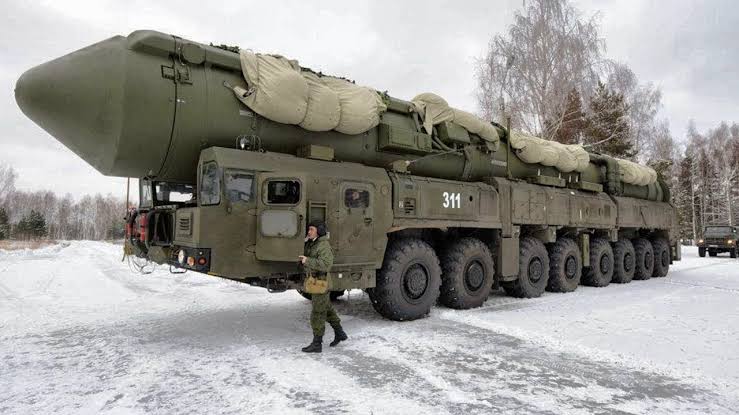
The RS-24 Yars, known by the NATO reporting name SS-29, is a solid-fuel, multiple independently targetable reentry vehicle (MIRV)-equipped missile. It is an upgraded variant of the earlier Topol-M system and is designed to carry multiple nuclear warheads, which can be deployed either from silo launchers or from mobile transporter-erector-launchers (TELs).
Its mobile nature makes it particularly difficult for adversarial forces to locate and neutralize.
Russia has long invested heavily in modernizing its nuclear triad—the combination of land-based ICBMs, submarine-launched ballistic missiles, and strategic bombers—as a core tenet of its defense strategy. The Yars missile, which entered service in 2010, is central to this modernization.
These test launches are typically conducted from the Plesetsk Cosmodrome in northwestern Russia, with the missile’s mock warheads hitting their designated target area, often the Kura Missile Test Range on the far-eastern Kamchatka Peninsula.
In line with strategic arms control protocols, which aim to prevent miscalculation, Russia often notifies the United States in advance of such ICBM tests.
However, the timing of such displays of military might is frequently interpreted through the lens of current geopolitical friction.
Western observers consistently scrutinize these launches for any signs of a change in Moscow’s nuclear posture, especially as existing arms control agreements between Washington and Moscow face mounting pressure and uncertainty.
