

By Our Chief Football Correspondent in Kansas City
Football, bloody hell. If you ever needed a single match to explain why the world stops for the FIFA World Cup, this was it. On a sweltering night in Missouri, Austria and Algeria did not just play out a football match; they orchestrated a six-goal opera packed with tactical warfare, majestic individual brilliance, and a ending so cruel it should have come with a health warning.
When the dust finally settled on a breathtaking three-three draw at the Kansas City Stadium, both sets of players collapsed to the turf in sheer exhaustion, having successfully secured safe passage to the Round of 32 while simultaneously crushing the dreams of watching Iran.
For long periods, this final Group J encounter threatened to become the cagey, risk-averse tactical stalemate that many pre-match cynics had predicted.
With tournament heavyweights Argentina already out of sight at the top of the group, a point apiece would do nicely for both nations. But nobody told the superstars on the pitch. Driven by generational icons and hungry young talent, the match exploded into life, transforming a cagey affair into an instant World Cup classic.
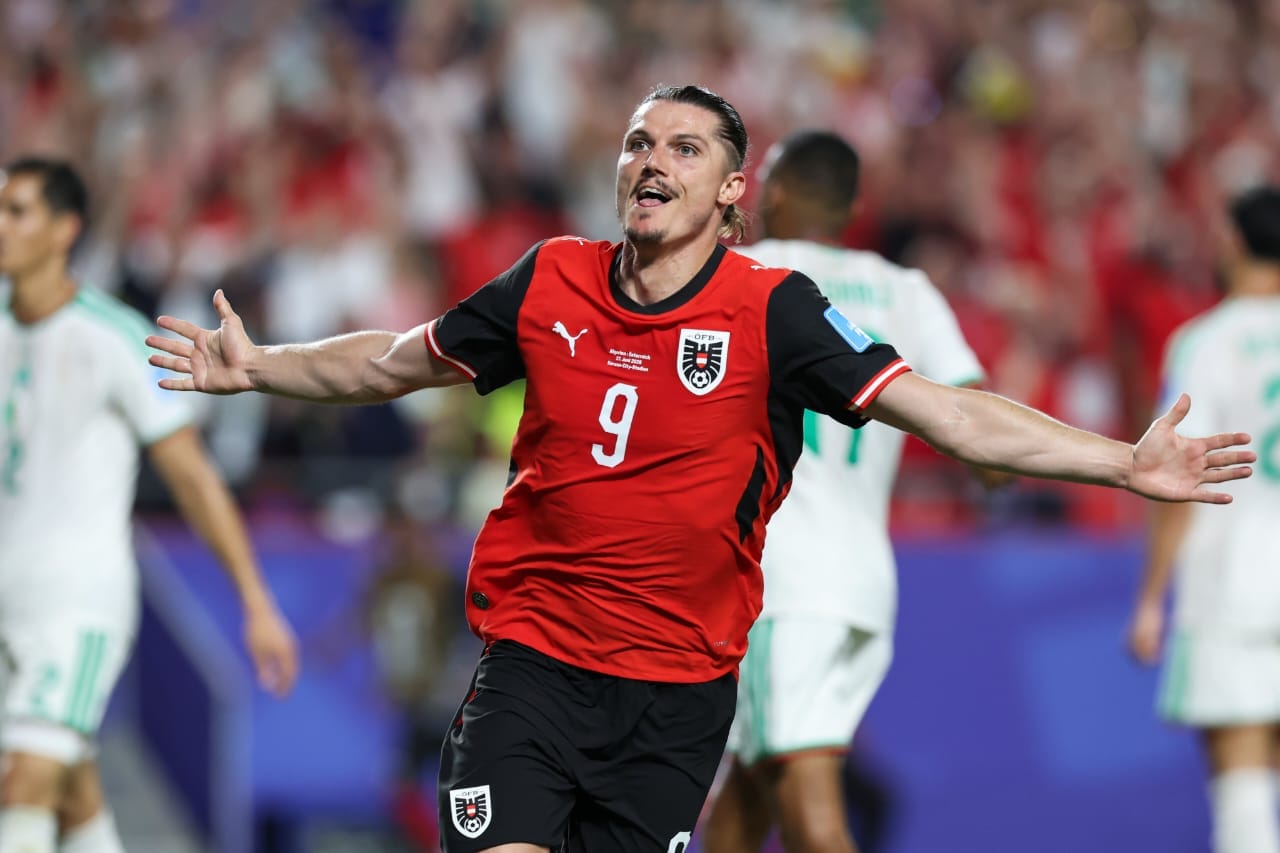
Austria drew first blood in the twenty-eighth minute, courtesy of their veteran talisman, Marko Arnautovic. Showing the predator’s instinct that has defined his long career, the mercurial forward latched onto a delightfully clipped long ball from midfield general David Alaba. Sneaking behind a sleeping Algerian backline, Arnautovic maintained his composure to scuff a clinical finish past the despairing Oussama Benbot.
The Austrian contingent in the stands erupted, but the advantage served only to poke the African giants into life. Algeria, marshaled by their legendary captain Riyad Mahrez, responded with ferocious intensity.
Young midfield maestro Fares Chaibi served warning by rattling the woodwork with a thunderous effort from distance, but the equalizer would arrive just before the interval in truly bizarre fashion.
A loose ball appeared destined to travel out of play, only to take a wicked bounce off the corner flag. The ever-alert Mahrez reacted quickest, snapping up possession and feeding the overlapping Rafik Belghali.
The defender slalomed past two static Austrian shirts before thumping a sensational finish high into the net in the forty-fifth minute, ensuring parity at the break.
The second half began at an even more frantic pace. Ralf Rangnick rung the changes for Austria, introducing fresh legs to regain control, and the tactical gamble paid immediate dividends. In the fifty-fifth minute, Konrad Laimer drove down the right flank and pulled back a perfectly weighted low cross to the edge of the eighteen-yard box.
Arriving like a locomotive was Marcel Sabitzer, who met the ball first-time with a laser-guided strike that flew into the bottom corner.
Once again, Austria led. Once again, it lasted a mere five minutes.
Algeria’s star-studded frontline simply refused to be beaten. In the sixtieth minute, Houssem Aouar produced a magnificent piece of trickery down the left wing, leaving his marker for dead before whipping an inviting low cross through the penalty area.

Ghosting in at the back post with the spatial awareness of a master craftsman was Mahrez, who swept the ball home from close range to restore equality. It was Mahrez’s thirty-ninth international goal for his country, but incredibly, his very first across four separate World Cup tournaments.
What followed was a bizarre thirty-minute period of chess. Realizing that a two-two draw suited both teams perfectly, the intensity vanished. Algeria comfortably knocked the ball around their backline, while Austria retreated into a mid-block, content to watch the seconds tick away. In the press box, journalists began typing their match reports, lamenting a tame end to a fine game.
Deep into added time, with the clock showing ninety-three minutes, Austria grew complacent. A loose pass was intercepted, and Aouar quickly spotted the run of his captain. Mahrez, showing the cold-blooded composure that brought him Premier League titles, glided behind the defense and fizzed a sublime low strike into the bottom corner.
It was a goal that sent Algeria second and, as things stood, knocked Austria completely out of the World Cup. The Austrian dugout looked physically sick.
But Rangnick had one final roll of the dice. He threw on his giant substitute striker, Sasa Kalajdzic, pushing everyone forward in a desperate, final-second gamble. In the ninety-sixth minute, with literally the last action of the game, a hopeful ball was launched into the Algerian penalty box.
Michael Gregoritsch rose highest to nod it across the six-yard box, and there was the towering Kalajdzic to bundle the ball home.
Cue absolute pandemonium. The Austrian bench cleared as players sprinted to celebrate with their traveling fans, knowing their World Cup dream was alive.
They move on to face Spain in Los Angeles, while Algeria’s heroic efforts earn them a date with Switzerland in Vancouver.
The final stat sheet perfectly mirrored the chaotic nature of this six-goal thriller. Both nations fought to an absolute standstill, splitting possession exactly even with each team commanding fifty percent of the ball over the ninety minutes.
In terms of attacking intent, Austria registered twelve total shots throughout the contest, hitting the target on six occasions, which gave them a clinical fifty percent accuracy in front of goal. Algeria were slightly more active in the final third, letting fly with fourteen total attempts, though they matched their European counterparts by placing exactly six of those shots on target.
Defensively, it was a physical and disciplined battle, with Austria committing eleven fouls compared to Algeria’s nine. The referee had a relatively clean game to manage, brandishing just one yellow card the entire evening, which was shown to Austria’s opening goalscorer Marko Arnautovic in the eleventh minute of the first half for an early, mistimed challenge. Algeria did not pick up a single booking during the match.
Austria’s aerial supremacy was evident as they earned seven corner kicks, using their height advantage to trouble the Algerian defense, while the Desert Foxes forced four corners of their own, preferring to build their attacks through intricate ground play and the wizardry of their wingers.
