

By Emmanuel Thomas l Monday, August 24,2026
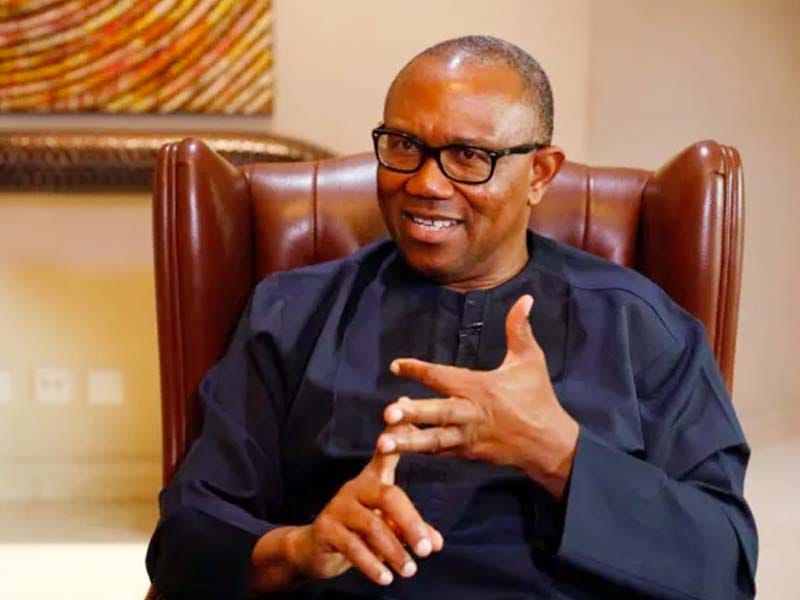
LAGOS — Former presidential candidate and Labour Party chieftain, Mr. Peter Obi, has issued a passionate plea to governments at all levels, particularly the Federal Government, to urgently prioritize the reconstruction and maintenance of existing road networks over the commencement of new, headline-grabbing infrastructure projects.
Highlighting the compounding economic toll and human suffering caused by the state of Nigerian transport corridors, Obi shared a firsthand account of a traveler who spent nearly 42 hours negotiating what should ordinarily be an eight-hour trip.
According to the former Anambra State Governor, a commuter who left Onitsha on Saturday night to catch a Sunday morning bus to Lagos only arrived at his destination by 2 p.m. on Monday.
”Until I left Lagos at 8 p.m. yesterday, he had not arrived in Lagos,” Obi stated. “He only arrived at about 2 p.m. today. A journey that usually takes a maximum of 8 hours now takes nearly two days.”
Obi emphasized that the problem extends far beyond mere cosmetic damage to asphalt, noting that it severely drains national productivity and threatens business survival.
”This is not just about bad roads,” he noted. “It is about lost man-hours, stranded passengers sleeping on highways, wasted fuel, damaged vehicles, delayed goods, and businesses losing millions of naira.”
Making a case for practical public administration, Obi urged authorities to shift focus away from grand projects designed primarily to capture media attention. He maintained that the primary metric for effective public works must be the tangible benefit conferred on citizens’ daily routines and livelihoods.
”Nigerians do not need new projects just for the headlines. We need functional roads that make life and economic activity possible,” Obi added. “A government must understand that infrastructure is not necessarily about the size of the project; it is about the number of lives and livelihoods it improves.”

Reiterating his long-held stance on national governance reform, Obi expressed optimism about the country’s trajectory, concluding with his signature refrain: “A new Nigeria is POSSIBLE, and Nigeria will be OK.”
The transportation crisis along critical economic arteries—such as the Lagos-Ibadan Express Road, the Benin-Ore-Sagamu Expressway, and the East-West Road—remains a major point of public concern in Nigeria. Key transit corridors connecting the commercial hub of Lagos to the South-East and South-South geopolitical zones routinely suffer severe gridlock caused by deep potholes, broken-down heavy-duty trailers, and uncoordinated security checkpoints.
This travel disruption is not an isolated complaint. Obi has consistently advocated for budget rationalization regarding public works. During his tenure as Governor of Anambra State (2006–2014), Obi emphasized completing inherited projects and restoring active trade corridors before initiating new constructions.
His latest intervention arrives amid mounting economic pressures, where fuel price hikes and currency fluctuations have already pushed logistics costs to record highs, making additional road delays financially crippling for haulage operators and small business owners alike.
Obi’s message serves as a direct critique of ongoing federal capital expenditure allocations, calling for a policy pivot from expansive new infrastructure dualization projects toward immediate, comprehensive maintenance of existing arterial networks.
To stay informed on highway conditions and transport safety policies, you can monitor official updates on the Federal Ministry of Works or track interstate travel advisories via the Federal Road Safety Corps (FRSC).
