


By Our Special Correspondent
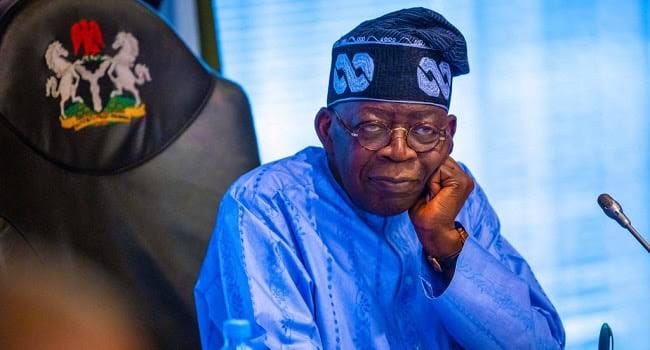
KANO — A formidable legal and political storm is gathering over the 2027 general elections as a civil society organization has approached the Federal High Court sitting in Kano, seeking the disqualification of President Bola Ahmed Tinubu from seeking re-election.
The suit, initiated by the Centre for Reform and Public Advocacy (CFRPA), marks an early, aggressive ignition of pre-election litigation targeted at the nation’s number one seat. It reopens an volatile chapter of identity and academic verification controversies that heavily dominated the discourse of the 2023 electoral cycle.
In the originating summons filed before the court, the plaintiff is asking the judiciary to bar President Tinubu from participating in the 2027 presidential contest. The CFRPA alleges that the President presented forged academic credentials and a falsified National Youth Service Corps (NYSC) discharge certificate to the Independent National Electoral Commission (INEC) in the buildup to the 2023 general elections.
As the case stands before the court, these heavy allegations remain unproven and are strictly subject to judicial determination. However, the development has already sent shockwaves through Nigeria’s political landscape, signaling that the upcoming 2027 race will be heavily fought not just on the campaign trail, but within the hallowed chambers of the judiciary.
The plaintiff’s legal team is anchoring its arguments on constitutional provisions regarding the integrity of documents submitted to the electoral umpire by candidates seeking public office.
According to sources close to the filing, the CFRPA claims to have compiled fresh perspectives on documentation submitted by the President, asserting that discrepancies in his historical academic filings constitute a breach of the ground rules for eligibility.
Under Section 137(1)(j) of the 1999 Constitution of the Federal Republic of Nigeria (as amended), a person shall not be qualified for election to the office of President if they have presented a forged certificate to the Independent National Electoral Commission.
The plaintiff wants the Federal High Court to interpret this provision strictly against the President in anticipation of the 2027 timelines.
Legal analysts are quick to note the strategic location of the filing. Kano State has long served as a crucial political barometer and a volatile battleground in northern Nigerian politics. By bringing the matter before the Federal High Court in Kano, the plaintiffs are ensuring maximum political visibility in a region that plays a decisive role in determining presidential outcomes.
To understand the weight of this new legal battle, one must look back at the turbulent events of 2023. The question of President Tinubu’s academic background is arguably one of the most litigated and publicly debated matters in modern Nigerian political history.
Following the February 2023 presidential election, opposition candidates—most notably Alhaji Atiku Abubakar of the Peoples Democratic Party (PDP) and Peter Obi of the Labour Party (LP)—launched fierce legal challenges against Tinubu’s victory. At the heart of Atiku’s appeal was an intense, globally followed legal expedition to the United States.
Through US court orders, Atiku’s legal team successfully secured a deposition from the Registrar of Chicago State University (CSU), Caleb Westberg.
During that high-stakes deposition, the CSU official confirmed that Bola Ahmed Tinubu did indeed attend and graduate from the institution between 1977 and 1979.
However, controversy erupted over the physical certificate submitted to INEC. The university administration noted that while the graduation was authentic, they could not verify the specific design and template of the replacement certificate submitted to Nigeria’s electoral umpire, attributing discrepancies to clerical changes over the decades.
The opposition vociferously argued that this was proof of “unconventional forgery.” However, when the matter escalated to Nigeria’s apex court, the Supreme Court shut down the admission of the US deposition.
The five-member panel, led by Justice John Okoro, ruled that the window for presenting new evidence had closed at the tribunal stage, adding that the allegation of forgery had not been proven beyond a reasonable doubt within the strict statutory timelines of election petitions.
The court affirmed Tinubu’s victory in October 2023, bringing a temporary closure to the drama.
What makes the CFRPA’s new lawsuit distinct—and legally complex—is its forward-looking nature. Unlike the 2023 petitions, which sought to overturn an already concluded election under post-election tribunal rules, this suit functions as a pre-election challenge aimed at an upcoming election cycle.
However, the suit faces immediate, steep constitutional and procedural hurdles:
Presidential Immunity: Under Section 308 of the 1999 Constitution, sitting Presidents enjoy absolute immunity from civil and criminal prosecution while in office. Legal practitioners are already debating whether a pre-election disqualification suit can bypass this immunity shield.
Jurisdiction and Status: Legal experts question whether a civil society group has the locus standi (legal standing) to initiate a pre-election disqualification suit under the current Electoral Act, a right usually reserved for political parties and co-contestants.
The Principle of Res Judicata: The defense will almost certainly argue that the issues regarding the President’s certificates have already been definitively ruled upon by the Supreme Court in 2023, and cannot be re-litigated.
Despite these steep judicial hurdles, the political implications of the lawsuit are immense. The ruling All Progressives Congress (APC) has already begun mobilizing for 2027, with various state chapters—including Kano—recently offering early endorsements for the President’s second-term bid.
For the opposition and civil society actors, keeping the certificate issue alive serves as a mechanism to constantly challenge the administration’s moral legitimacy.
It ensures that the narratives of transparency and corporate governance remain at the forefront of national discourse as the country grapples with complex economic reforms.
As the Federal High Court in Kano prepares to give directions on the matter, the presidency has yet to issue a formal reaction. However, history suggests that the administration’s legal defense team will move swiftly to have the matter dismissed at the preliminary stage.
Whether this suit represents a genuine legal vulnerability or merely an early piece of political theatre, it guarantees that Nigeria’s march toward 2027 will be anything but quiet.